Introduction
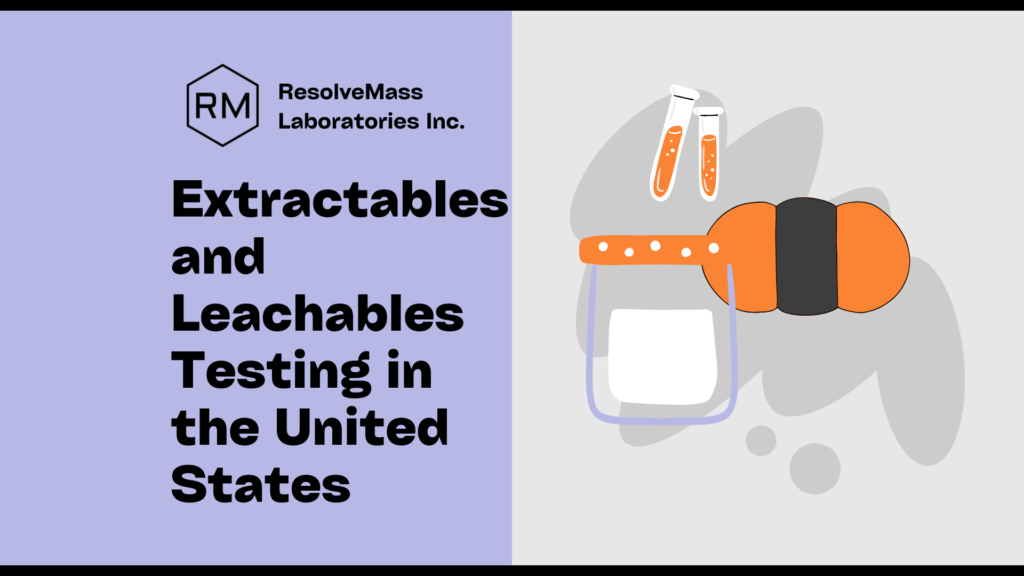
In the pharmaceutical and medical device industries, ensuring the safety and efficacy of products is paramount. One critical aspect of this process is extractables and leachables (E&L) testing, which identifies potentially harmful substances that could migrate from packaging or delivery systems into the product. For companies operating in the United States, selecting the right partner for E&L testing is a pivotal decision that impacts compliance, product safety, and market success.
Understanding Extractables and Leachables
What Are Extractables?
Extractables are chemical compounds that can be extracted from a material, such as a container or device, under aggressive laboratory conditions. These compounds may include:
- Organic additives
- Inorganic fillers
- Residual solvents
- By-products of polymer degradation
What Are Leachables?
Leachables are a subset of extractables that migrate into the product under normal usage conditions. These compounds can interact with the product, potentially compromising its safety and efficacy.
Importance of E&L Testing
Regulatory Compliance
In the United States, regulatory agencies such as the FDA and USP require rigorous E&L testing for pharmaceutical products, medical devices, and combination products [1]. Compliance with these standards ensures that products are safe for patient use.
Product Integrity and Patient Safety
E&L testing safeguards patient health by identifying toxic substances that could lead to adverse effects. It also ensures product quality, reducing the risk of recalls and liability issues [2].
Market Access
Conducting thorough E&L testing facilitates market access, as it demonstrates compliance with stringent regulatory requirements. This is especially important for products intended for international markets.
Choosing the Right Partner for E&L Testing
Key Considerations
1. Technical Expertise
Look for a partner with extensive experience in E&L testing, particularly for your specific product category. Their expertise should cover:
- High-performance liquid chromatography (HPLC)
- Gas chromatography-mass spectrometry (GC-MS)
- Inductively coupled plasma mass spectrometry (ICP-MS)
2. Regulatory Knowledge
Ensure the testing provider is well-versed in U.S. and international regulatory guidelines, including FDA, USP <1663> and <1664>, and ICH Q3D standards.
3. State-of-the-Art Facilities
Advanced analytical techniques and equipment are essential for accurate detection and quantification of extractables and leachables. Verify that the lab uses cutting-edge technologies.
4. Customized Testing Protocols
Every product is unique, and testing protocols should be tailored to meet specific requirements. A good partner will offer flexibility and collaboration.
Why ResolveMass Laboratories is Your Ideal Partner
ResolveMass Laboratories Inc. offers comprehensive extractables and leachables testing services in the United States. Our capabilities include:
- Advanced analytical techniques such as HPLC, GC-MS, and ICP-MS
- Expertise in regulatory compliance
- Customized testing protocols to suit client needs
Visit our services page for more details: Custom Polymer Synthesis Services and Analytical Testing Services.
The E&L Testing Process
Step 1: Risk Assessment
The process begins with a comprehensive risk assessment to identify materials and potential extractables.
Step 2: Analytical Screening
Techniques such as HPLC, GC-MS, and ICP-MS are employed to screen for extractables under controlled conditions.
Step 3: Simulation Studies
Leachables are identified using simulation studies that replicate real-world product usage conditions.
Step 4: Data Analysis and Reporting
Detailed reports are generated, including risk evaluations and recommendations for mitigation.
Challenges in E&L Testing
Complex Materials
Advancements in material science have led to the development of complex polymers and composites, which pose challenges in E&L analysis [3].
Sensitivity and Detection Limits
Modern products require ultra-sensitive detection methods to identify trace levels of harmful compounds.
Regulatory Updates
Staying updated with evolving regulations is critical to ensure ongoing compliance.
Future Trends in E&L Testing
Integration of AI and Automation
Artificial intelligence and automation are enhancing the accuracy and efficiency of E&L testing.
Green Chemistry Practices
Sustainable testing methodologies are being adopted to minimize environmental impact [4].
Enhanced Detection Methods
New technologies, such as hybrid mass spectrometry, are improving detection capabilities.
Contact ResolveMass Laboratories
Partner with ResolveMass Laboratories for reliable and comprehensive extractables and leachables testing. We combine technical expertise, state-of-the-art facilities, and a commitment to regulatory compliance to deliver accurate and actionable results.
Visit our Contact Us page to learn more or to schedule a consultation.
References
- U.S. Food and Drug Administration. “Guidance for Industry Container Closure Systems for Packaging Human Drugs and Biologics” FDA Regulatory Documents, 2020. https://www.fda.gov/media/70788/download
- Final Concept Paper ICH Q3E: Guideline for Extractables and Leachables (E&L) Dated 30 June 2020, https://database.ich.org/sites/default/files/ICH_Q3E_ConceptPaper_2020_0710.pdf
- USP Plastic Packaging General Chapters: An Overview, D. Jenke, D. Norwood, Packaging, Storage, and Distribution Expert Committee, USP, http://www.usp.org/sites/default/files/usp_pdf/EN/meetings/workshops/stim_article_661_final.pdf
- USP <1663> ASSESSMENT OF EXTRACTABLES ASSOCIATED WITH PHARMACEUTICAL PACKAGING/DELIVERY SYSTEM http://www.usp.org/sites/default/files/usp_pdf/EN/meetings/workshops/m7126.pdf
- USP <1664> ASSESSMENT OF DRUG PRODUCT LEACHABLES ASSOCIATED WITH PHARMACEUTICAL PACKAGING/DELIVERY SYSTEMS
http://www.usp.org/sites/default/files/usp_pdf/EN/meetings/workshops/m7127.pdf
GC-MS Method Development & Validation Services: What Pharma Companies Should Look For
Introduction GC-MS method development is a critical cornerstone of pharmaceutical quality control, impurity profiling, and…
Best GC-MS Analysis Services in North America: How to Compare Labs for Accuracy and Turnaround Time
Introduction When your research, product development, or regulatory compliance depends on reliable analytical data, selecting…

Role of pH, Temperature, and Process Parameters in Nitrosamine Formation: A Formulation Risk Model
Introduction: Understanding Process Parameters in Nitrosamine Formation Nitrosamine formation in pharmaceutical products is not accidental….

Packaging Interaction and Nitrosamine Formation: How Blister Films, Elastomers, and Containers Influence Impurities
Summary — Key Takeaways Packaging materials can catalyze or inhibit nitrosamine formation through extractable, leachable,…

Excipient Variability and Its Impact on Nitrosamine Formation: A Deep Technical Investigation
Introduction: Understanding Excipient Impact on Nitrosamine Formation The Excipient Impact on Nitrosamine Formation has become…

The Science Behind Nitrosamine Degradation Pathways: What Every Formulation Scientist Should Know
Summary of Key Insights Nitrosamine degradation pathways govern the chemical fate of nitrosamines during formulation,…